THE 10 BEST WALKING TRAILS IN MALTA & GOZO
Malta and Gozo are islands shaped to be explored on foot.
A Detailed Walking Guide
Malta and Gozo reward walking in a way few Mediterranean islands do. Their compact scale, layered history, and exposed landscapes mean that moving on foot is not just possible, it is the most honest way to experience them.
Winter is when this becomes obvious. Cooler temperatures, clear light, greener valleys, and fewer people allow walks to unfold naturally. Distances feel shorter. Views feel larger. The islands feel less curated and more real.
The walks below are not extreme hikes. They require no technical skill, no special equipment, and no fitness obsession. What they ask for instead is time, curiosity, and a willingness to let the landscape set the pace.
MALTA
1. Marfa Ridge to Red Tower Loop Walk
Starting and ending at Ramla Bay Resort
Distance: approx. 7.5–8.5 km (loop)
Time: 2.5 – 3.5 hours, unhurried
Difficulty: Moderate
Best in: Winter and early spring
Type: Coastal and ridge loop
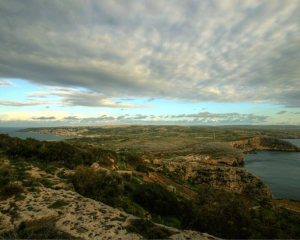
This circular walk begins directly from Ramla Bay Resort and traces the exposed spine of the Marfa peninsula, combining coastal paths, open ridge walking, and some of the widest views in northern Malta.
It is one of the rare walks on the island that feels complete without transport. You step out, keep going, and return changed.
Route Overview (Clockwise Loop)
Ramla Bay Resort → Armier Bay → Ramla Tat-Torri → White Tower → Aħrax Point → Madonna Statue → Irdum il-Ħmar → Red Tower → Return to Ramla Bay
The Walk, Step by Step
From Ramla Bay Resort to Armier Bay
Leave the resort on foot and follow quiet coastal roads toward Armier Bay. This opening section is gentle and grounding, with the sea always present and little traffic in winter.
The walk eases you in before the landscape opens up.
Armier Bay to Ramla Tat-Torri
From Armier, continue along the coast toward Ramla Tat‑Torri, where the terrain becomes more open and exposed. Limestone rock replaces road, and the horizon widens.
This stretch introduces the rhythm of the walk: steady movement, constant views, very little noise.
Ramla Tat-Torri to White Tower
The path climbs gently toward the White Tower, a quiet historic landmark set against open sky and sea.
Here the sense of scale becomes more apparent. Gozo and Comino begin to dominate the view, especially on clear winter days.
White Tower to Aħrax Point
Continue north toward Aħrax Point, the exposed tip of the peninsula. This is the most elemental section of the walk.
The wind is stronger, the land is raw, and the sea feels close and active. It is a natural pause point, not because you are tired, but because the landscape asks for it.
Aħrax Point to Madonna Statue
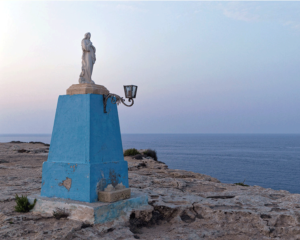
From Aħrax, the route curves south toward the Madonna Statue, a simple landmark overlooking open water.
This section is quieter and slightly sheltered compared to the northern tip, with long, uninterrupted walking and fewer visual interruptions.
Madonna Statue to Irdum il-Ħmar
The path continues along Irdum il‑Ħmar, where low cliffs drop toward the sea and the land feels stripped back and austere.
This is one of the most contemplative stretches of the loop. The walking is steady, the views wide, and the silence noticeable.
Irdum il-Ħmar to Red Tower
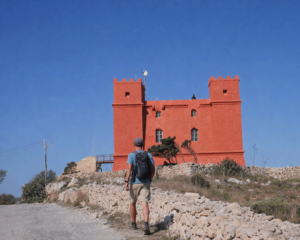
The final climb leads inland toward the Red Tower (St Agatha’s Tower), the highest and most iconic point of the walk.
From here, the reward is panoramic: Mellieħa Bay below, Gozo and Comino ahead, and the full Marfa ridge laid out behind you.
Red Tower back to Ramla Bay Resort
From Red Tower, descend via dirt tracks and quiet roads back toward the resort. This closing section feels gentle and reflective, allowing the walk to settle rather than end abruptly.
What to Know Before You Go
-
This is a fully exposed walk. Wind is common, especially near Aħrax Point
-
Wear proper walking shoes. Terrain varies from road to rock
-
Bring water and a light jacket, even on sunny days
-
No facilities once you leave Armier Bay until you return
Why This Walk Works in Winter
In summer, this route would be relentless. In winter, it is expansive.
Cool air, clear light, empty paths, and long views turn the Marfa peninsula into a place you can actually inhabit rather than pass through. The loop format adds a quiet satisfaction: you leave on foot, circle the land, and come back without interruption.
It is a walk that feels earned, not engineered.
2. Għajn Tuffieħa to Golden Bay Coastal Walk
Distance: approx. 2.5 km one way
Time: 1.5–2 hours (longer if extended)
Difficulty: Moderate
Best season: Winter to early spring
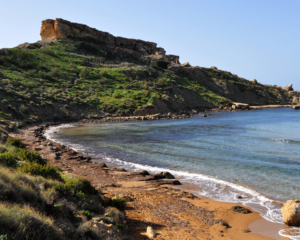
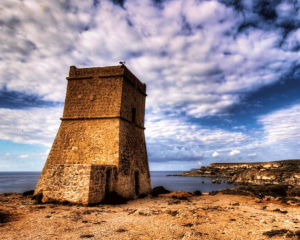
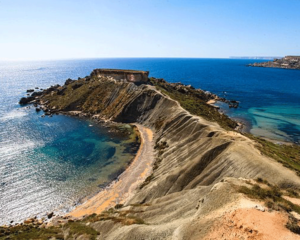
This is one of Malta’s most visually striking coastal walks, following the cliff line between Għajn Tuffieħa and Golden Bay.
Route description
The walk begins near the Għajn Tuffieħa car park, just before the long staircase down to the beach. A dirt path runs west along the cliff edge, rising and falling gently. The coastline stays open and uninterrupted, with wide views across the Mediterranean.
The terrain changes constantly: compact earth, clay slopes, stone steps, and occasional rocky sections. In winter, the red clay hills turn green, grasses return, and the landscape feels alive rather than scorched.
The route naturally curves toward Golden Bay, where the beach gradually comes into view below.
Extensions
Stronger walkers can continue past Għajn Tuffieħa toward Gnejna Bay, adding steeper sections and extra distance.
Facilities & finish
Golden Bay offers cafés and bus connections year round. Most walkers return by bus or taxi.
Key considerations
Uneven ground, exposed cliffs, strong wind possible. No shade.
Why winter matters
In summer this walk is punishing. In winter it becomes immersive, cinematic, and surprisingly gentle.
3. Il-Majjistral Nature & History Park Trails
Distance: 2–8 km (flexible)
Time: 1.5–4 hours
Difficulty: Easy to Moderate
Best season: Winter
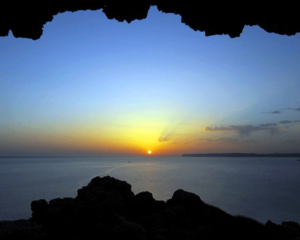
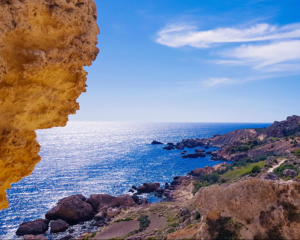
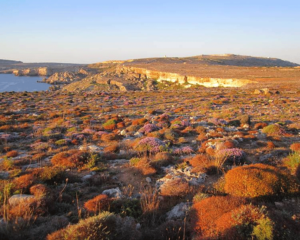
Il-Majjistral Nature & History Park is Malta’s largest natural park and offers a network rather than a single trail.
Route description
Trails weave through countryside, valleys, and coastline. Expect old farmhouses, shepherd shelters, Roman roads, WWII remains, and open valleys that suddenly meet the sea.
Paths are mostly dirt tracks and limestone rock. Navigation is intuitive but not heavily signposted.
Access points
Għajn Tuffieħa, Golden Bay, Manikata.
Facilities
None inside the park. Bring water.
Why winter matters
Green ground cover, wild herbs, and space. This is Malta without filters.
4. Paradise Bay to Ċirkewwa Coastal Walk
Distance: approx. 2 km one way
Time: 1–1.5 hours
Difficulty: Easy
Best season: Winter
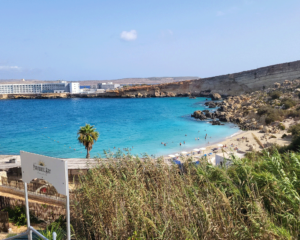
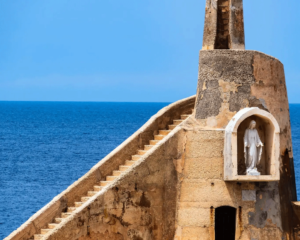
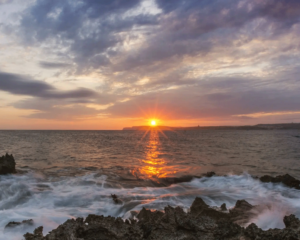
This walk traces Malta’s northernmost edge between Paradise Bay and Ċirkewwa.
Route description
Starting at Paradise Bay, the path follows the coast closely. The sea remains in constant view, with Gozo directly ahead.
Terrain is mostly flat with rocky patches and low vegetation.
Finish options
End at the ferry terminal, continue walking, or cross to Gozo.
Why winter matters
Raw sea, fewer people, and a sense of exposure that feels energising rather than harsh.
5. Dingli Cliffs Walk
Distance: approx. 4 km return
Time: 2 hours
Difficulty: Easy
Best season: Winter
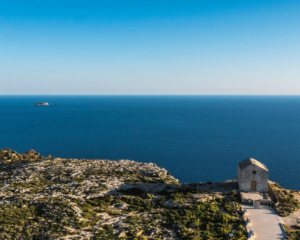
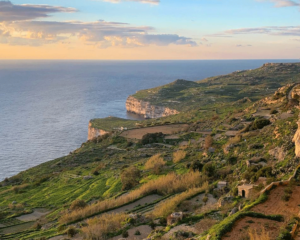
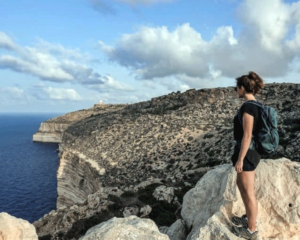
This walk follows Malta’s highest point along Dingli Cliffs.
Route description
Wide tracks run along the cliff edge with uninterrupted views of the Mediterranean and Filfla. Farmland lies on one side, open sky and sea on the other.
Landmarks
St Mary Magdalene Chapel is a key visual anchor.
Safety
Cliff edges are unguarded.
Why winter matters
Cool air and long light make this contemplative rather than exhausting.
GOZO
6. Ta’ Ċenċ Cliffs Walk
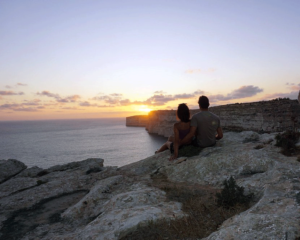
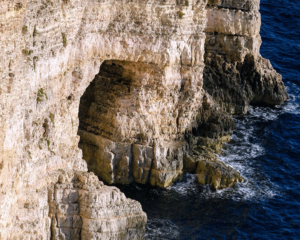
Distance: approx. 4 km return
Time: 2–2.5 hours
Difficulty: Moderate
Best season: Winter
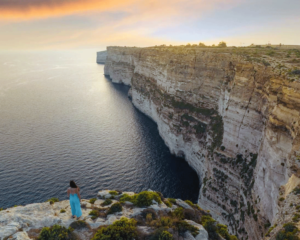
Among the most dramatic cliffs in the Maltese Islands.
Route description
Paths follow the cliff edge south of Sannat, with sheer drops and vast open views. The terrain is uneven but manageable.
Environmental note
Protected Natura 2000 site. Respect access guidelines.
Why winter matters
Scale, silence, and space. Gozo at its most elemental.
7. Wied il-Għasri Valley Walk
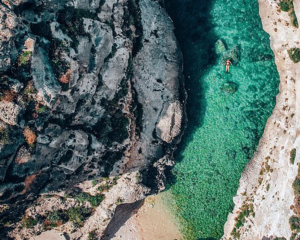
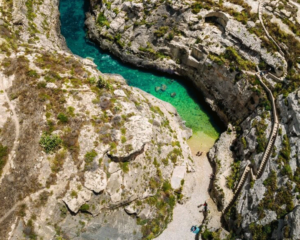
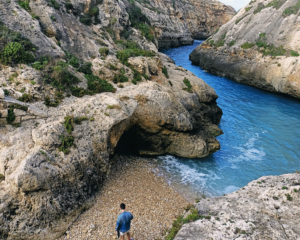
Distance: approx. 1.5 km return
Time: 1–1.5 hours
Difficulty: Easy to Moderate
Best season: Winter
A short but powerful walk through Wied il-Għasri.
Route description
Stone steps descend through a narrow gorge that opens suddenly to the sea. In winter, water flows and vegetation returns.
Facilities
None. Bring everything you need.
Why winter matters
Compact, atmospheric, and alive.
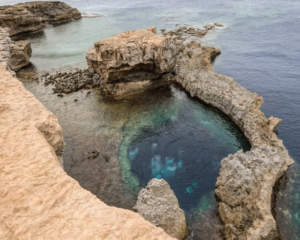
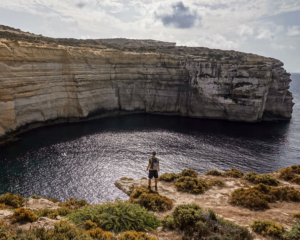
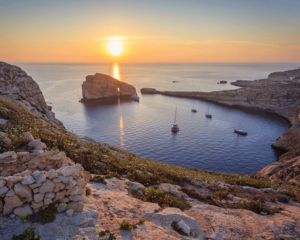
8. Xlendi to Dwejra Coastal Walk
Distance: approx. 6 km one way
Time: 3–4 hours
Difficulty: Moderate
Best season: Winter
One of Gozo’s most rewarding long walks.
Route description
Cliffs, inland plateaus, valleys, and exposed headlands define the route. Geological formations and historic watchtowers appear along the way.
Finish
End at Dwejra and return by taxi.
Why winter matters
Clarity, quiet, and drama without heat stress.
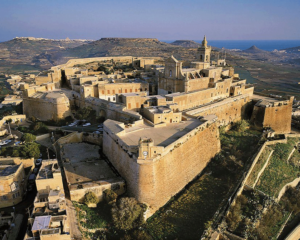
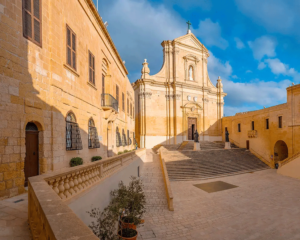
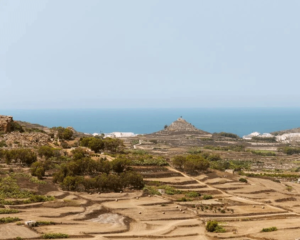
9. Victoria Citadel & Countryside Loop
Distance: approx. 3 km
Time: 1.5 hours
Difficulty: Easy
Best season: Winter
A cultural walk starting at the Cittadella.
Route description
Stone streets lead out into farmland and villages before looping back.
Why winter matters
Balanced, cultural, and unhurried.
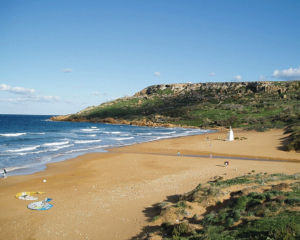
10. Ramla Bay Gozo Coastal & Valley Walk
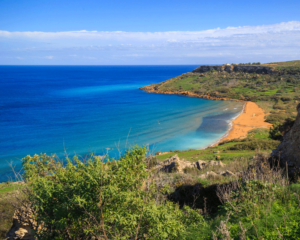
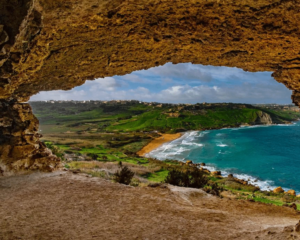
Distance: approx. 3 km
Time: 1.5–2 hours
Difficulty: Easy
Best season: Winter
A gentle walk around Ramla Bay, combining dunes, valley paths, and open countryside.
Why winter matters
Green valleys, soft light, and space to slow down.
Final note for guests
Walking in Malta and Gozo is not about ticking routes off a list. It is about moving through land that still carries memory, weather, and silence.
Winter is when that becomes possible.